Department of Chemical Engineering and Bioprocesses
Department of Chemical Engineering and Bioprocesses
Applications of Fluidized Bed Reactors in Biocatalysis
CHEMBIOCHEM 26 18
Assessing the Effect of Deep Eutectic Solvents on ?-Chymotrypsin Thermal Stability and Activity
ChemSusChem

Department of Chemical Engineering and Bioprocesses

Department of Chemical Engineering and Bioprocesses
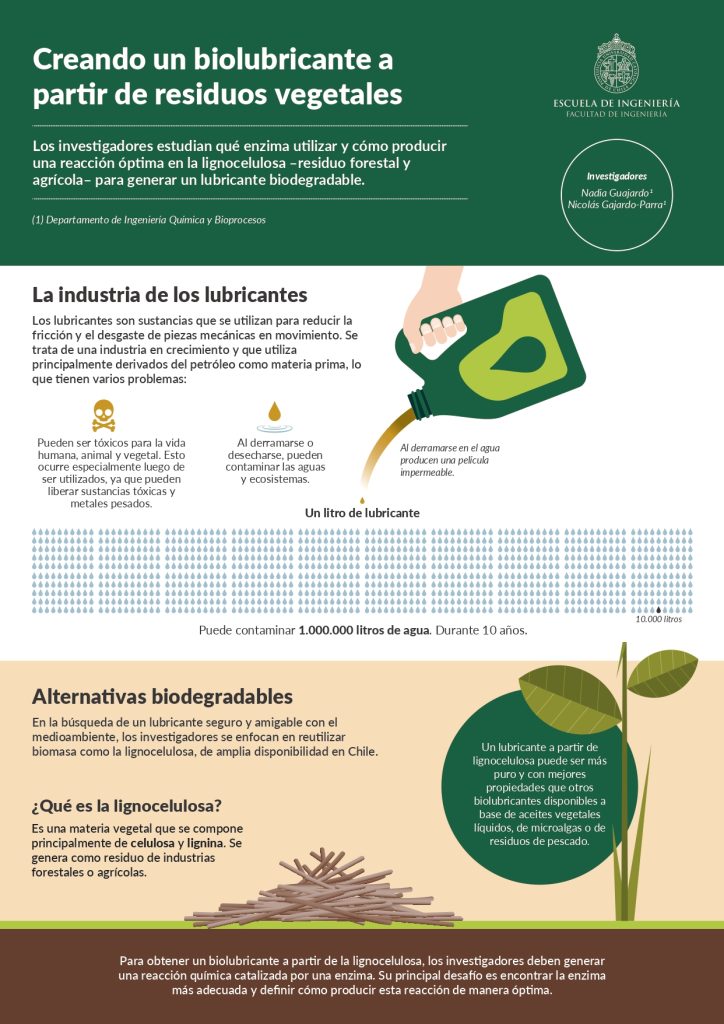
In everyday life, thousands of mechanical parts are in constant motion—from car engines to the gears of industrial machines. To prevent these parts from wearing down due to rubbing, known as friction, lubricants must be used. Unfortunately, the vast majority of these products are petroleum-based and generate a significant environmental impact.
After being used, conventional lubricants can release heavy metals that are toxic to animals, plants, and humans. If spilled or improperly disposed of, just one liter of lubricant can contaminate up to one million liters of water and remain in ecosystems for as long as ten years.
In response to this challenge, a sustainable alternative has emerged, led by Chilean researchers Nadia Guajardo and Nicolás Gajardo-Parra from the Department of Chemical Engineering and Bioprocesses at Pontificia Universidad Católica de Chile. It is a biolubricant created from plant-based waste, transforming what we currently consider “trash” into an ally for the planet.
At the heart of this innovation is lignocellulose, a material that is abundant as waste from the forestry and agricultural industries. It is mainly composed of cellulose and lignin and is obtained from leftover branches, husks, and wood.
Because it is a biologically derived material, a lignocellulose-based lubricant has a fundamental advantage: it is biodegradable. This means that, unlike petroleum-derived products, it breaks down safely in nature without leaving a toxic footprint.
In the laboratory
To transform lignocellulose into a lubricant, scientists use enzymes. These are proteins that trigger specific chemical reactions; in this case, the ones needed to convert wood and plant residues into an oily substance with lubricating properties.
One of the main challenges was finding the optimal enzyme and determining the variables that would make the process more efficient, such as temperature, the proportion of components, and the type of reactor to be used (that is, the vessel designed to control the chemical reaction).
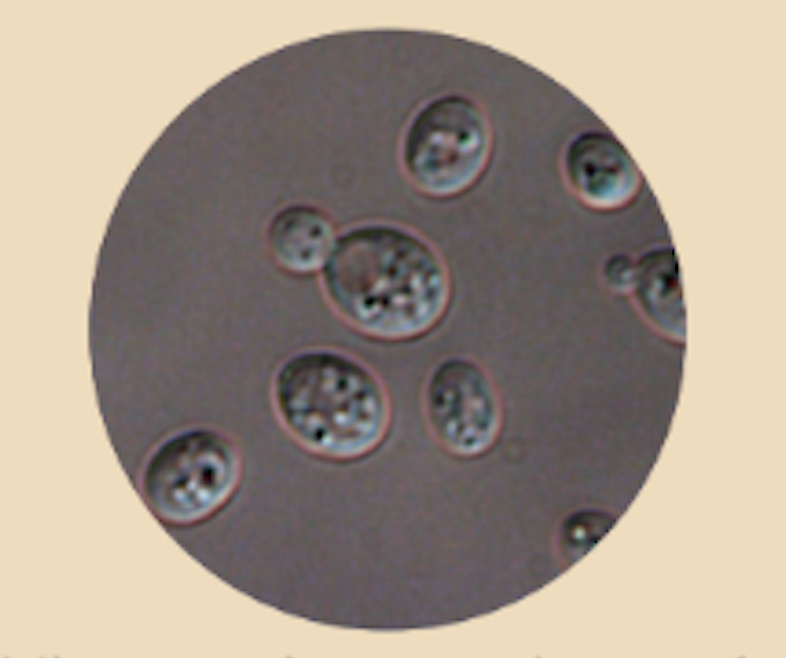
So far, the best candidate appears to be the enzyme Lipase B, originally found in the microorganism Candida antarctica, but now also produced commercially.
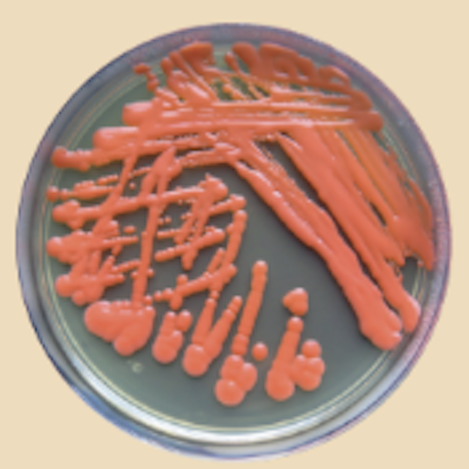
Laboratory culture of the microorganism Candida Antarctica, where the Lipase B enzyme is found.
Close-up of the microorganism Candida Antarctica under a microscope.
The team experimented with two types of setups to carry out the chemical reaction in the laboratory:
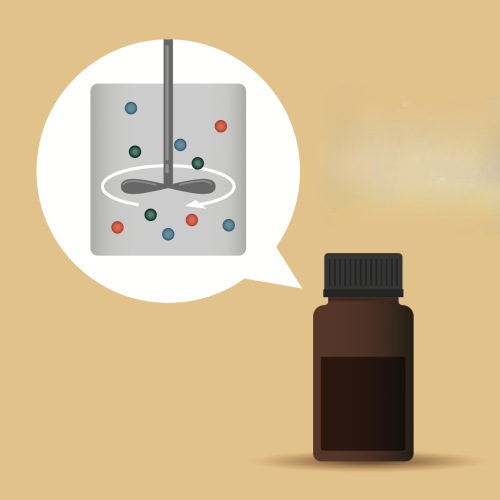
Ilustración del reactor por lotes, uno de los dos probados en el estudio.
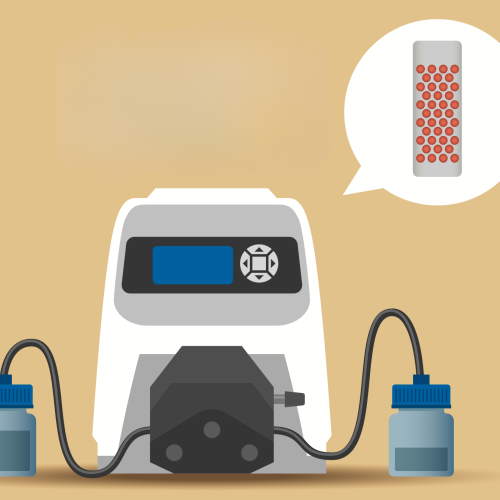
Ilustración del reactor continuo. La columna con puntos rojos representa el interior, donde se encuentra empacada la enzima.
This Chilean product has shown the same level of efficiency as petroleum-derived lubricants, and even some technical advantages over other biolubricants currently available. Because it is less fluid, it adheres to metal parts for a longer time, reducing the need for reapplication.
Department of Chemical Engineering and Bioprocesses
Department of Chemical Engineering and Bioprocesses
Applications of Fluidized Bed Reactors in Biocatalysis
CHEMBIOCHEM 26 18
Assessing the Effect of Deep Eutectic Solvents on ?-Chymotrypsin Thermal Stability and Activity
ChemSusChem

Department of Chemical Engineering and Bioprocesses
The researchers’ goal is for this biolubricant to reach the market. Its production could be strategic for the country, since using low-cost local waste helps promote a circular economy. In addition, the academics are exploring a secondary use as a biopesticide in agriculture, as it could protect crops against certain fungi and insects without the use of harsh chemicals.
Thus, research like this encourages us to think not only about solutions to reduce the use of polluting substances, but also about new ways to make use of our natural waste.